
Let's backtrack a little, at the risk of getting carried away with observations. I am familiar with the painting, however, I knew little about it before I started.
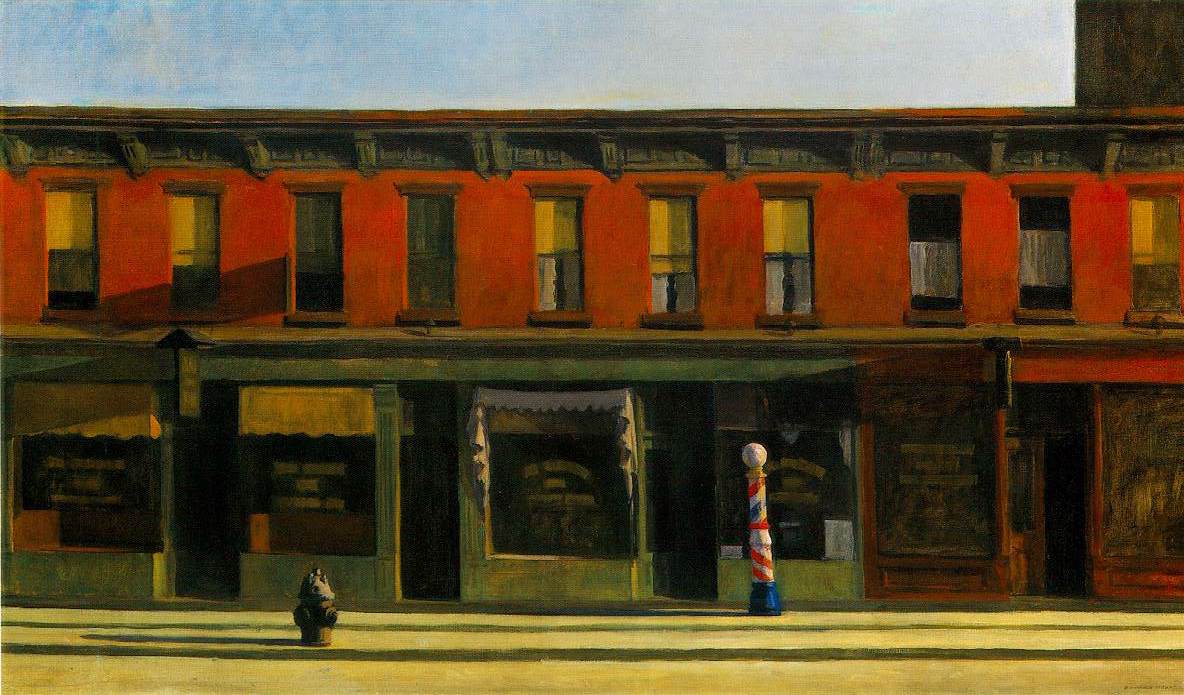
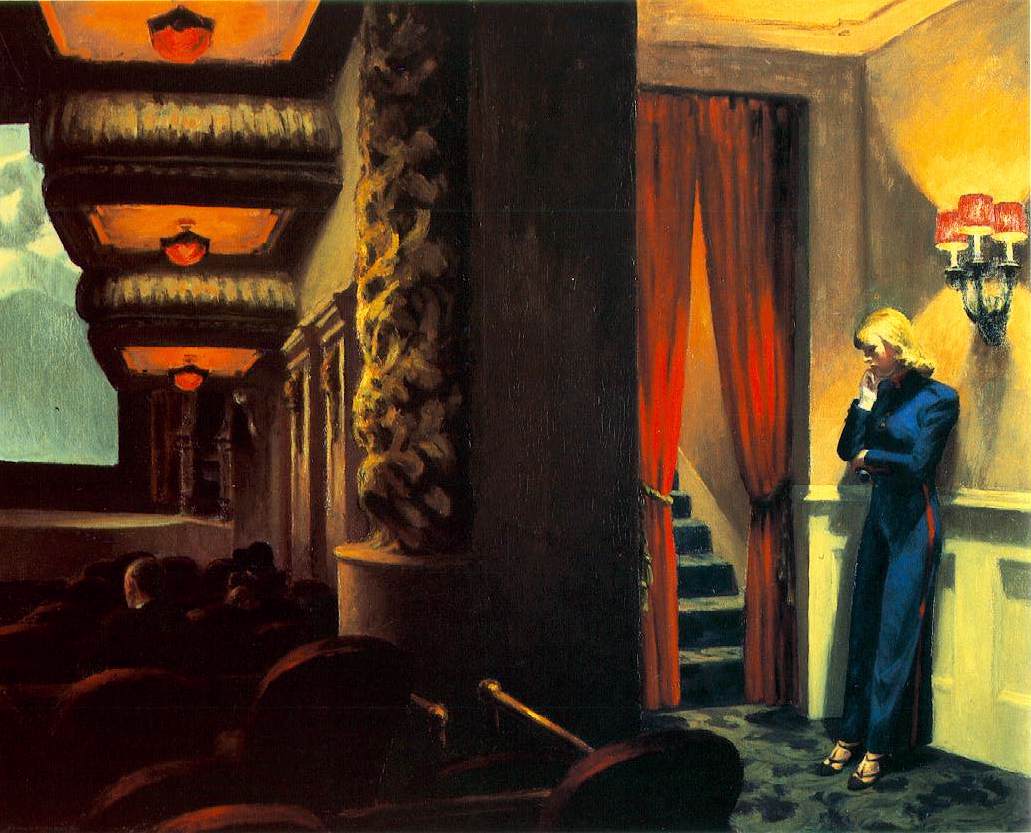
Nighthawks, as it is aptly named, was painted in 1942 by Edward Hopper, an American painter who lived from 1882 - 1967. He painted several other notable works, such as our class favorite Early Sunday Morning, as well as New York Movie, Office in a Small City, and Automat. The painting is often called Hopper's most recognizable work, however, it coincides with his overall theme of the gloom of modern American urban life in the first half of the century. The work was created immediately following the attack on Pearl Harbor.
Pictured Left: Hopper, Self-Portrait.
Hopper was actually born very close to my hometown of Haverstraw, in Nyack, New York. Nyack sits on the Hudson river, on the edge of Rockland County, a forty minute to an hour drive from Manhattan. From there he went on to study in New York City, at the New York Institute of Art and Design. He studied under and was influenced by Robert Henri, another notable American painter, who encouraged his students to not only portray urban life accurately, but to "cause a stir" with their art. Henri's pupils would later collectively be known as the Ashcan School of American Art.
Hopper spent time in Europe, offering him a contrasting perspective to his native New York and American life. Instead of Parisian cubism and abstractions, Hopper was attracted to realism and Victorian architecture. He also grew fond of impressionism, and enjoyed the work of Edgar Degas. He was forced to work as a commercial artist until 1923, when he painted Mansard Roof. He then painted a series of famous, successful paintings which allowed him to dedicate himself professionally and solely to his work. He divided up his time between New York and Truro, Massachusetts. He was often seen as very alienated, up until his death, in his studio near NYU and Washington Square, in 1967. Nighthawks, a beloved piece of Americana, now resides in the Art Institute of Chicago.
Below: Hopper's New York Studio.


No comments:
Post a Comment